13.06.2025
In the world of pistachio cultivation, the choice of variety is a determining factor for the success of an agricultural venture. Among the most notable varieties in recent years are Lost Hills and Golden Hills, both originating from California and developed to offer high yield, good climate adaptation, and disease resistance. This article provides a technical and comprehensive comparison between both varieties, ideal for farmers, technicians, and future investors looking to optimize their pistachio production in Spain.
The choice of a pistachio variety should not be taken lightly. Factors such as climate, soil characteristics, irrigation needs, harvest timing, ease of mechanical harvesting, and fruit quality are essential. Both Lost Hills and Golden Hills have been developed by the University of California to meet these demands, specifically designed for producing areas looking for high yield, ease of management, and quick production entry.
Below are the main technical differences between the Lost Hills and Golden Hills varieties regarding the fruit, tree, and soil and climate requirements. This comparative analysis is key for farmers to make fundamental decisions about which variety best fits their farm and production goals.
The fruit of the pistachio is one of the elements that most influences the profitability of the crop. This table compares the most relevant fruit characteristics of each variety, such as caliber, opening percentage, shell color, and ease of processing.
The vigor of the tree, its disease resistance, and its management needs directly impact maintenance costs and the sustainability of pistachio cultivation. The following table outlines the main vegetative characteristics of each variety.
The edaphoclimatic requirements are crucial when planting pistachios. This table offers a comparison of cold hour needs, drought tolerance, and adaptation to cold soils and areas. These parameters are fundamental for choosing the most suitable variety based on the autonomous community and local conditions.
If you want to discover everything about the Sirora variety, click here!
One of the great advantages of Lost Hills is its quick entry into production, making it a profitable variety in the short term. This is an excellent option for those seeking accelerated economic improvement in their agricultural operations.
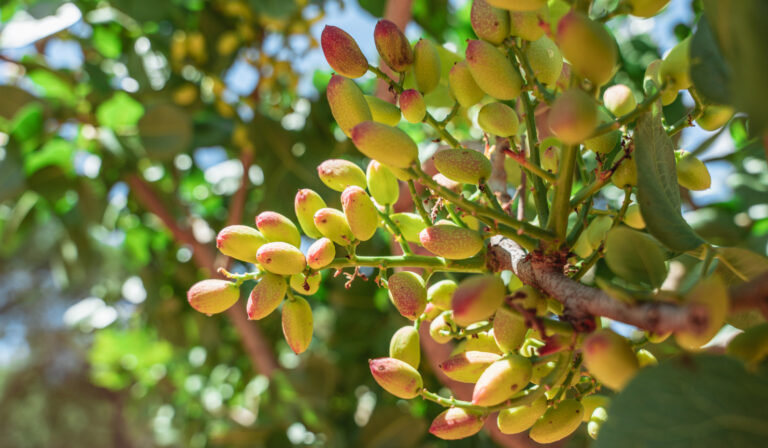
This variety stands out for its large fruit and clear shell, with a high opening percentage. These characteristics increase its market value, which is key in the current context of pistachios in Spain.
Lost Hills has shown excellent adaptation to areas like Castilla-La Mancha, Extremadura, and inland Andalucía, with a dry climate and marked winters.
Golden Hills allows for earlier harvesting, reducing climatic risks such as autumn rains or early frosts. This facilitates greater production security and better harvest management.
One of the most appreciated features by farmers is its lower need for pruning and treatments, which reduces maintenance costs for the operation.
It exhibits greater tolerance to fungal diseases like Alternaria, which allows for a reduction in the use of phytosanitary products and improves the sustainability of the crop.
Lost Hills adapts well to areas with a continental climate, cold winters, and long summers. It requires good irrigation planning, although it is resistant to dry periods.
Golden Hills is more versatile for areas with a risk of early frosts and allows for an earlier harvest, with less pruning requirement.
Both varieties need a male pollinator, with Peter and Randy being the most common options. The correct distribution of pollinators within the farm is crucial to ensure good fruit set.
Choosing the right variety is essential to ensure good profitability. In general terms:
It is also important to consider the available aids for new plantings, especially in rural development programs, and policies supporting young farmers.
Currently, in areas like Castilla-La Mancha, Lost Hills leads new plantings, while Golden Hills is gaining ground in high-altitude or climatically limited areas. Both are replacing the traditional Kerman, which, although still present, has greater sensitivity to diseases and a later harvest.
Choosing between Lost Hills and Golden Hills will depend on technical, climatic, and economic factors. Both offer clear competitive advantages over traditional varieties and have established themselves as favorites in Spain for modern pistachio plantings. Carefully evaluating the farm conditions, maintenance needs, and commercial goals will allow for the best decision for a profitable and sustainable agricultural investment.
Both varieties have similar yields, although Lost Hills usually has a slightly larger caliber and a higher percentage of open fruit.
Golden Hills requires less pruning and is more resistant to diseases like Alternaria.
Yes, as long as pollination and harvest dates are well planned. This can even diversify climatic risk and improve the efficiency of the operation.
At specialized nurseries like Agróptimum, which provides varietal guarantee, technical advice, and post-sale support.
Resources to include images
Image resource with caption: lorem ipsum dolor sit amet, consectetur adipiscing elit. Ut elit tellus, luctus nec ullamcorper mattis, pulvinar dapibus leo.
Lorem ipsum dolor sit amet, consectetur adipiscing elit. Ut elit tellus, luctus nec ullamcorper mattis, pulvinar dapibus leo.
Lorem ipsum dolor sit amet, consectetur adipiscing elit. Ut elit tellus, luctus nec ullamcorper mattis, pulvinar dapibus leo.
Image carousel resource with caption: IMPORTANT, ALL PHOTOS MUST BE OF THE SAME SIZE IN THEIR ORIGINAL FILE. lorem ipsum dolor sit amet, consectetur adipiscing elit. Ut elit tellus, luctus nec ullamcorper mattis, pulvinar dapibus leo.
Lorem ipsum dolor sit amet, consectetur adipiscing elit. Ut elit tellus, luctus nec ullamcorper mattis, pulvinar dapibus leo.
Lorem ipsum dolor sit amet, consectetur adipiscing elit. Ut elit tellus, luctus nec ullamcorper mattis, pulvinar dapibus leo.
Resources to make the text more visual
Resource enumeration with emojis. lorem ipsum dolor sit amet, consectetur adipiscing elit. Ut elit tellus, luctus nec ullamcorper mattis, pulvinar dapibus leo.
 43 % in lorem ipsum
20 % in lorem ipsum
31 % in lorem ipsum
13 % in lorem ipsum
Lorem ipsum dolor sit amet, consectetur adipiscing elit. Ut elit tellus, luctus nec ullamcorper mattis, pulvinar dapibus leo.
<

14.10.2026

9.10.2026

7.10.2026

1.07.2026