9.01.2026
We all know that plants use their flowers to reproduce and produce their fruits, and of course, the pistachio is no exception.
But... did you know that some varieties of pistachio bloom earlier than others? These varieties can have up to a month difference between them.
In this article, we will tell you everything you need to know about the flowering of pistachio and the details of each variety.
To understand the flowering of pistachio, we first need to understand the flower of the pistachio, which will help us understand what kind of plant the pistachio is.
The pistachio is a dioecious species. This means that there are female trees and male trees, depending on the type of flower they produce. Male trees produce a flower that can pollinate females, but cannot be pollinated by other males. Female trees produce a flower that can be pollinated by a male but cannot pollinate other females.
Other species, such as the almond tree, are hermaphroditic instead of dioecious. This means that all flowers can pollinate other flowers and be pollinated by other flowers, so there are no male and female almond trees, only almond trees.
This property regarding the flowering of pistachio greatly influences the planting design compared to other crops, as different males must be chosen in different proportions based on the design of the farm.
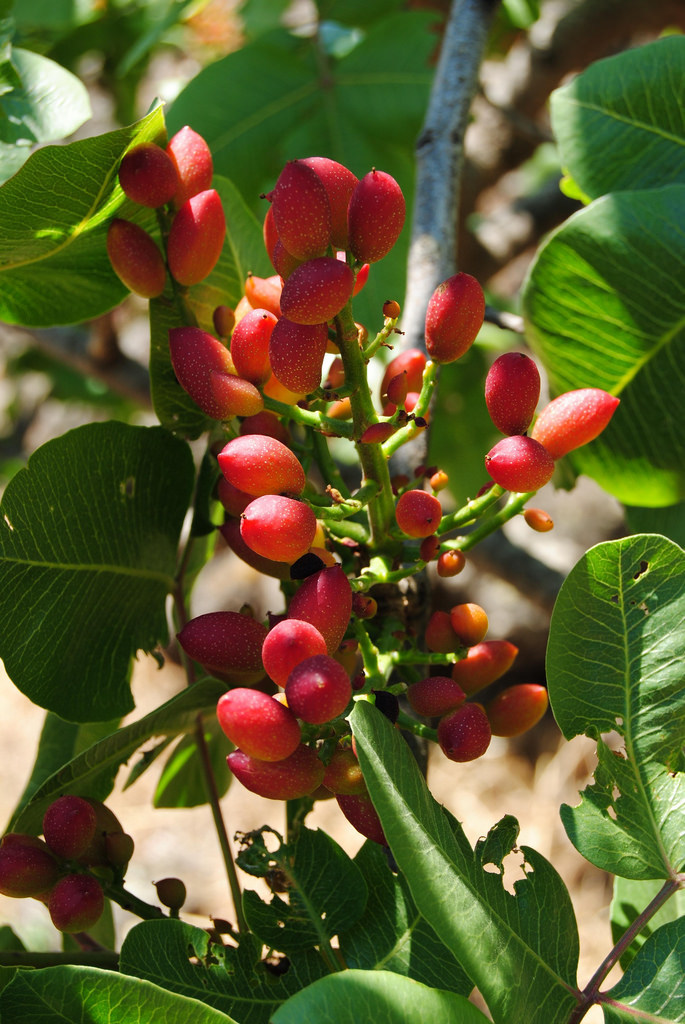
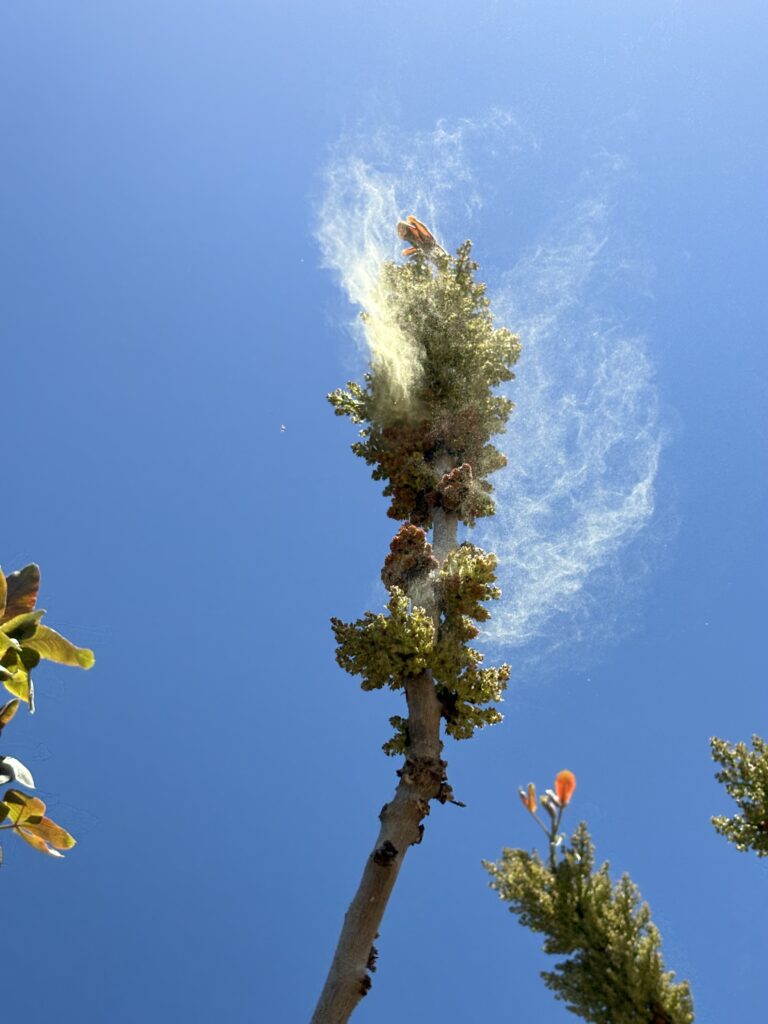
To the left, a male flower of pistachio releasing its pollen. To the right, a female flower of pistachio producing pistachio.
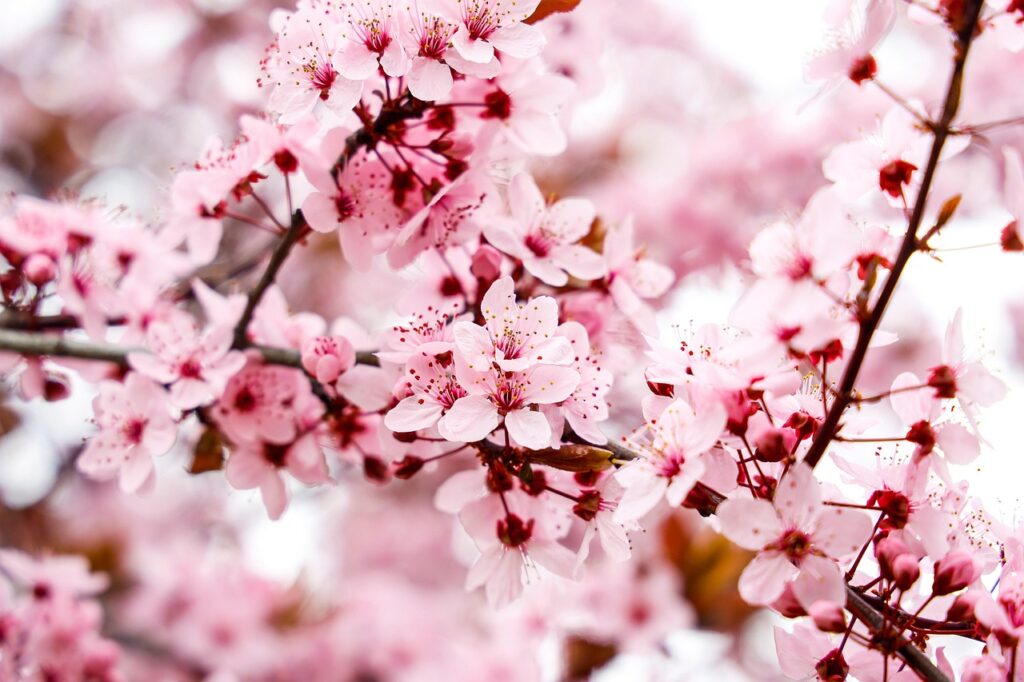
Hermaphroditic flower of the almond tree. They are all males and females at the same time.
Pistachio flowers are characterized by being incomplete, apetalous, and dioecious. In botany, an incomplete flower means it lacks one of the following elements: sepals, petals, stamens, and carpels.
Another very characteristic feature of pistachio flowers is that they do not have nectaries, which means they do not attract insects.
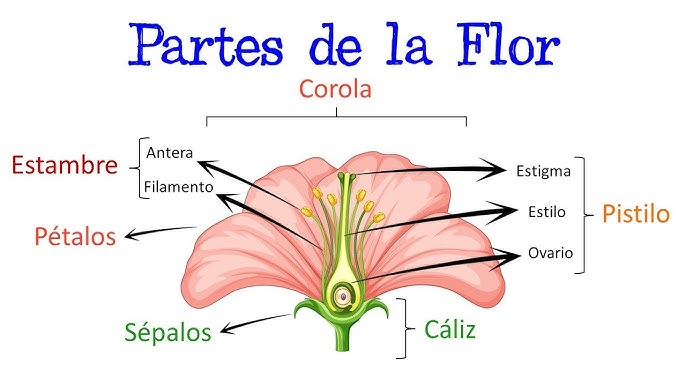
Pistachio flowers, both male and female, are incomplete.
In addition, the flowers are grouped in axillary panicles, forming a structure similar to a cluster. Flowering occurs a few weeks before budding, so in March, the flowers can be seen at an initial stage without leaves covering them.
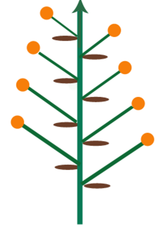

To the left is a diagram of the structure of a cluster. To the right is a diagram of an axial panicle. The flowers of the pistachio, both male and female, grow forming axial panicles; giving them a characteristic shape.
The pistachio is an anemophilous species. This means that pollen is transmitted between flowers by the wind. The pollen is produced by males in large quantities and is very light, facilitating its transport.
During the flowering of pistachio, insects do not carry pollen from males to females; their main means of transport is air. This makes the flowering phase particularly sensitive to periods of heavy rain or no wind. Heavy and continuous rain during the pollination phase greatly hinders pollen pollination.
Male flowers consist of 5 or 6 stamens loaded with bilocular anthers (formed by 2 sacs), while female flowers are composed of an ovary with a bifid or trifid stigma (the part that absorbs pollen) that is highly receptive.
It is important to note that, botanically, the male flower is considered the set of filaments and anthers, while the female flower is considered each of the ovaries that form the set that buds from the tree (since each ovary can produce a fruit).
27.08.2026
4.08.2026
1.07.2026
18.05.2026