
13.10.2025
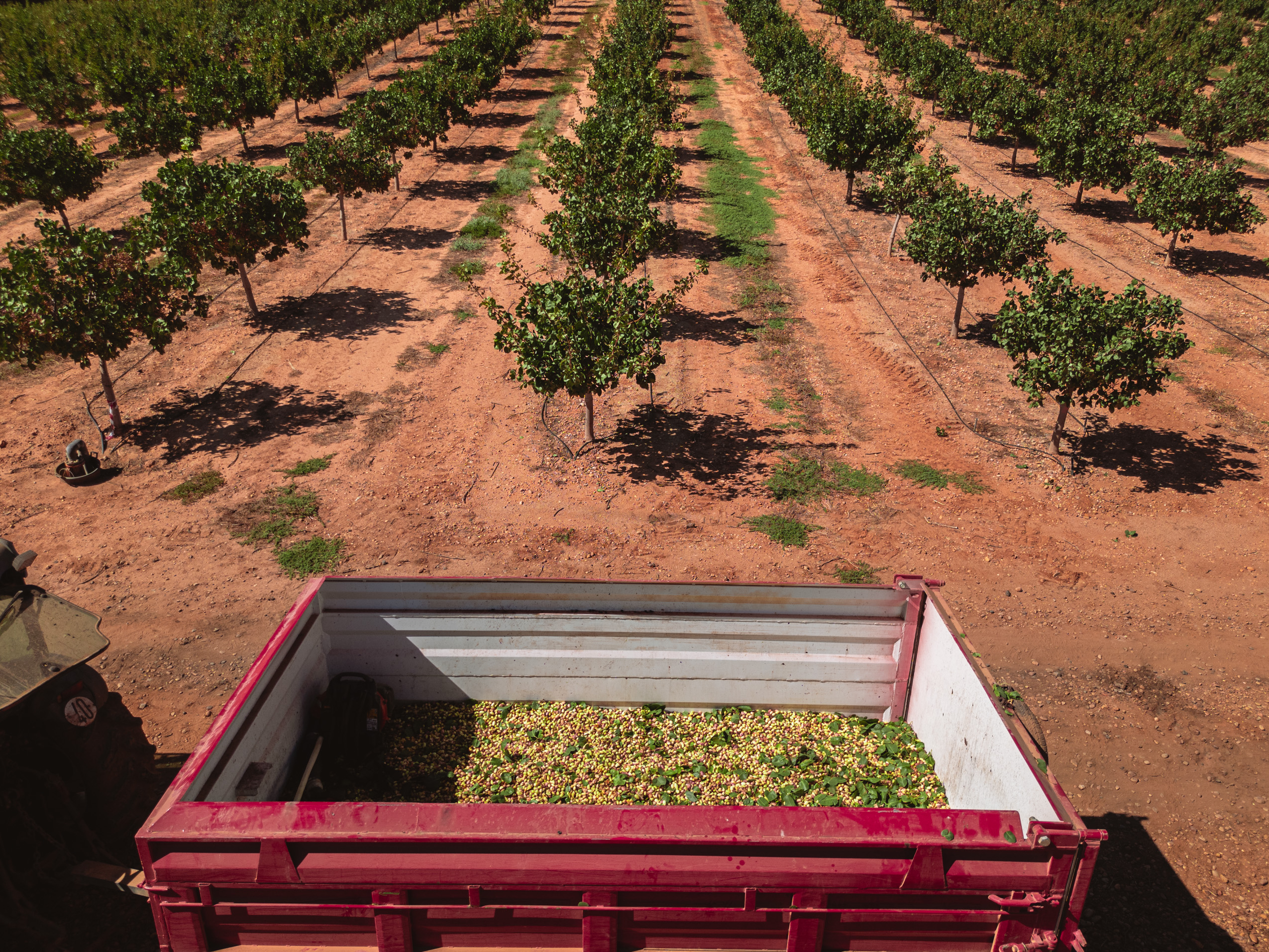
The ripening of pistachio is not an instantaneous event but a sequence of physiological changes in the pistachio tree and in the fruit that must be evaluated together. Observing and measuring four main indicators will allow you to confidently decide the harvest point: the color change, the pericarp opening, the so-called "tear point", and the moisture tests.
One of the first visible signs of ripening is the color change of the pericarp (the outer skin of the fruit). In many commercial varieties, the pericarp changes from a bright green to yellowish or reddish tones before losing its adherence.
This color is a useful signal but not sufficient on its own: it influences commercial perception but must be complemented with other observations because pigmentation varies between varieties (for example Kerman, Larnaka, Sirora, Lost Hills, or Golden Hills).
The pericarp opening (natural separation between the shell and seed) is the most decisive indicator. When the pericarp easily separates from the endocarp (the hard shell), the fruits are ready for efficient shelling and drying.
Observing the percentage of fruits with opening allows you to estimate the uniformity of ripening: high opening rates indicate that the batch can be harvested without risking an increase in the number of damaged pistachios or empty pistachios.
The so-called "tear point" is the tactile and visual sensation where the connection between the pericarp and the shell begins to give way. When applying slight pressure, the fruit detaches with a small separation (like a tear).
This manual test, combined with the observation of color and opening, is a traditional practice among pistachio farmers to confirm the moment of harvest.
The moisture of the fruit is critical: if the fruits have a moisture content that is too high upon arriving at the plant, the risk of mold, microbial proliferation, and aflatoxins during storage increases.
The recommended practice is to measure moisture in the field or during quick sampling upon reception; as a working reference, the final target after drying is usually between 5–7% moisture, but at the time of harvest, the fruit may present higher values that need to be quickly corrected through controlled drying.
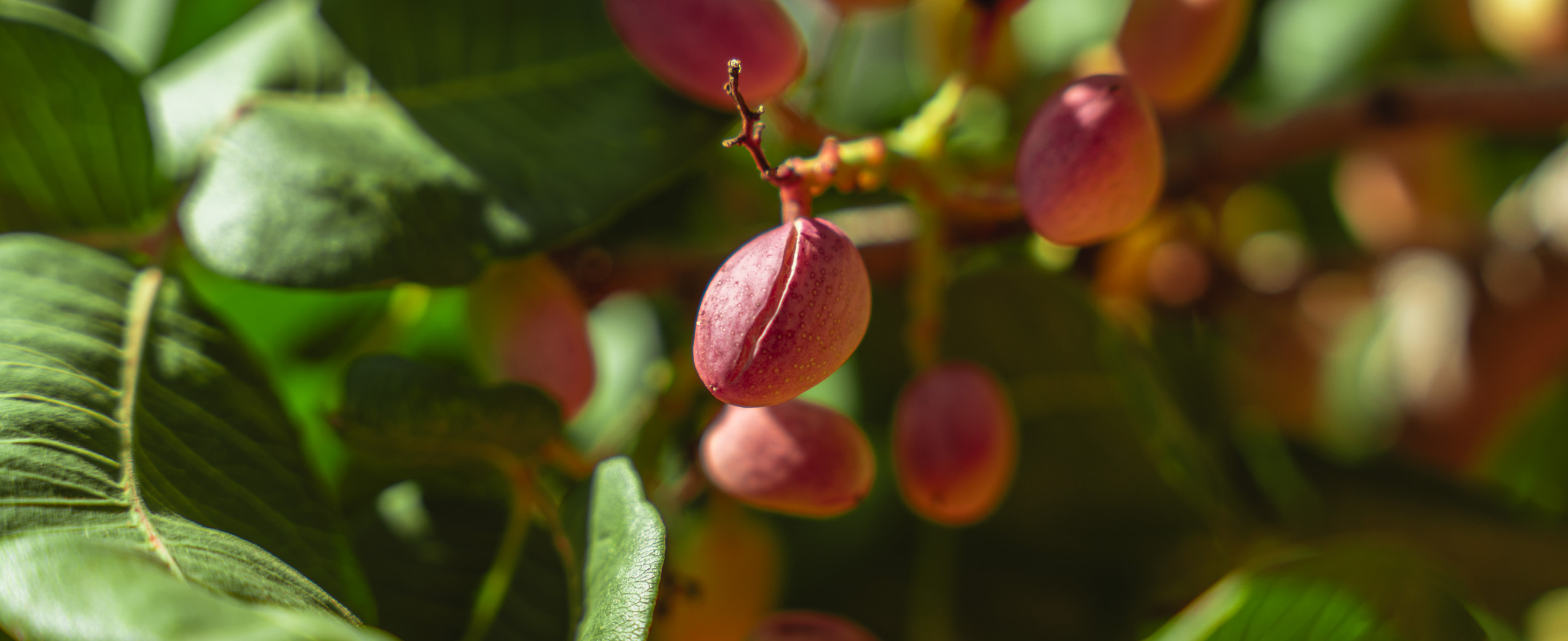
The harvest calendar varies by regions and varieties because ripening depends on the sum of climatic factors, prior chilling hours, and local conditions of the plantation. However, there are general guidelines:
For those managing new plantations or looking to expand area, remember that a pistachio tree begins commercial production around 7 years after planting under suitable conditions; thus, planning for planting and harvest calendar must integrate the return horizon and management of production campaigns.
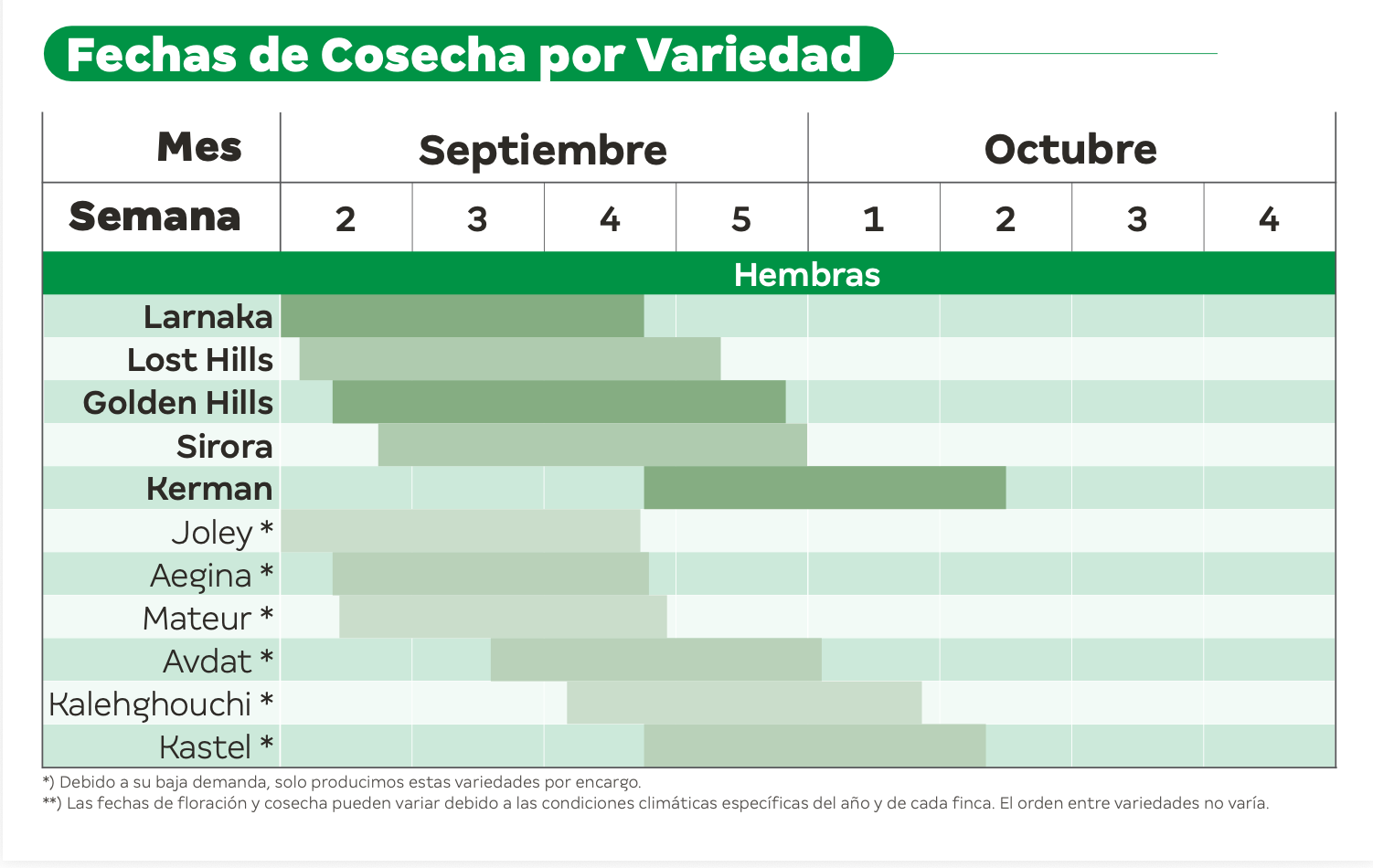
Selecting the appropriate harvesting technique depends on several factors, including production scale, terrain conditions, labour availability, and the intended commercial positioning of the crop (premium-grade quality versus bulk market supply).
The two principal approaches are manual harvesting and mechanised harvesting, each offering distinct advantages and limitations.
Manual harvesting remains common in smaller orchards or where maximum field selection is the primary objective. Traditional methods include hand-shaking branches, the use of poles, or hand-picking fruit onto tarpaulins or collection nets. Human handling enables careful selection during harvest, allowing damaged fruit and excess foliage to be excluded at source, thereby reducing downstream processing requirements. However, this method is labour-intensive and increasingly costly in regions facing labour shortages.
Under this system, sorting can be carried out directly in the field, with fruit showing defects in colour, damage, or moisture content removed immediately.
Mechanisation has become the prevailing solution in larger-scale plantations. The most widely used equipment includes:
The principal advantages of mechanised harvesting are speed, lower harvesting costs per kilogram, and the ability to operate within very narrow climatic windows. Nevertheless, improper machine calibration may increase fruit damage, particularly where shell fragility or fruit size varies, and where post-harvest logistics are not handled promptly.
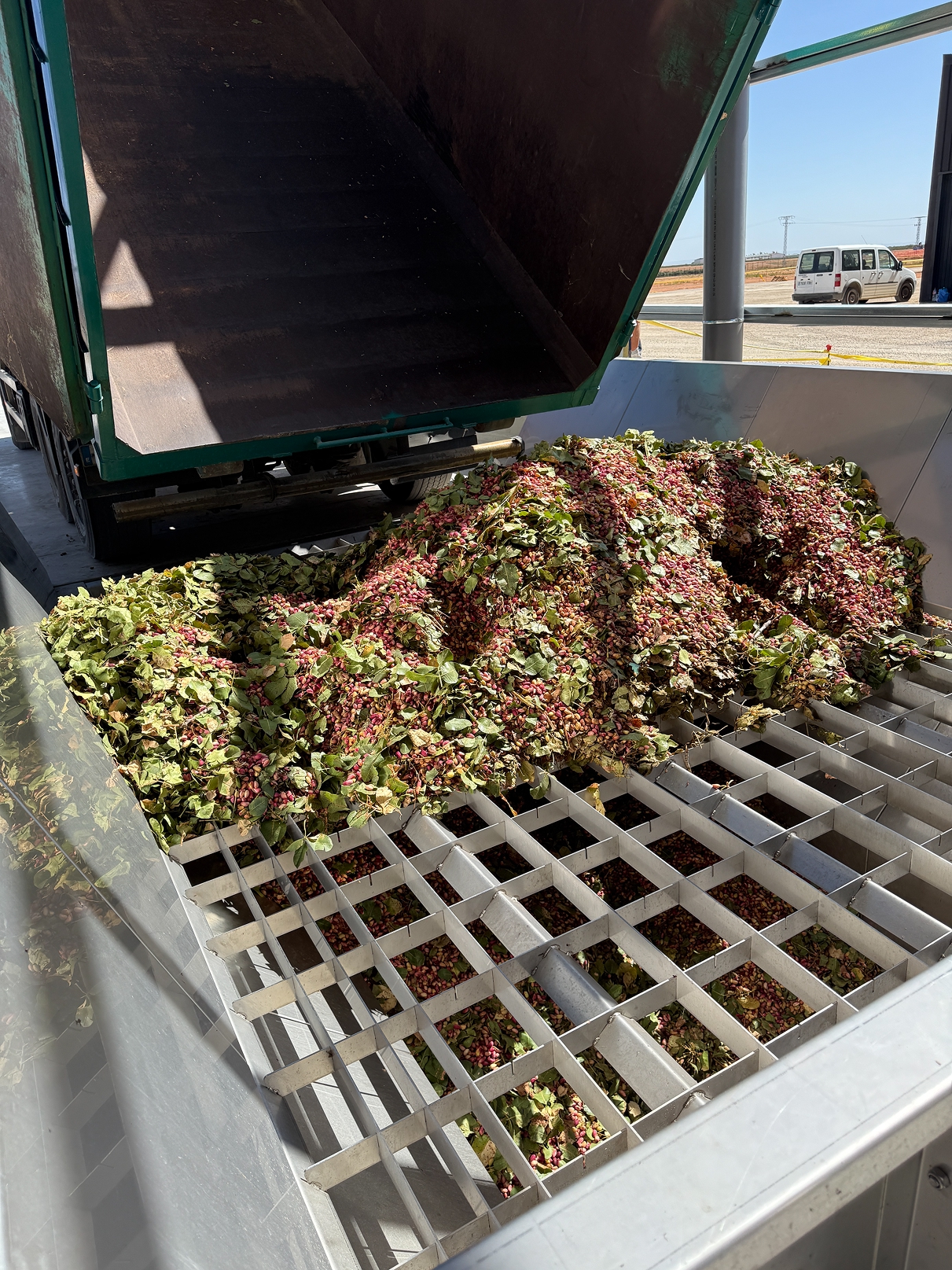
Regardless of the harvesting method employed, transport management is a critical stage in preserving product quality.
Recomendaciones prácticas:
En Agróptimum gestionamos la recepción en planta con protocolos que priorizan la trazabilidad y la calidad: muestreo inmediato, clasificación por lotes y programación de despelonado y secado según estado de humedad y apertura.
The initial stage of industrial processing — the post-harvest phase — is focused on stabilising the product, removing plant debris, separating the hull, and preparing the pistachios for drying and storage. Proper execution at this stage is essential to minimise losses and ensure product safety and quality.
Upon arrival at the processing facility, each load undergoes:
This process enables prioritisation of batches requiring urgent processing, particularly those with elevated moisture levels or visible signs of damage.
Hulling — the removal of the outer pericarp, sometimes referred to as green peeling or dehusking — is carried out using specialised equipment designed to separate the outer skin without damaging the shell.
This is a particularly delicate stage: overly aggressive hulling may result in shell damage and loss of commercial value, whereas insufficient hulling can leave residues that negatively affect drying efficiency and increase the risk of fungal development.
Following hulling, controlled drying reduces the moisture content to safe levels for storage.
Pistachio dryers and drying tunnels with controlled airflow systems allow moisture levels to be equalised while preserving colour and sensory properties.
The recommended final moisture content for storage is approximately 5–7%.
Once dried, the product may be stored under controlled conditions — with stable temperature and relative humidity — until grading, shelling, or dispatch to the customer.
Maintaining a well-managed stock rotation system and avoiding prolonged storage under unsuitable conditions are essential practices for preventing sanitary issues and preserving overall product quality.
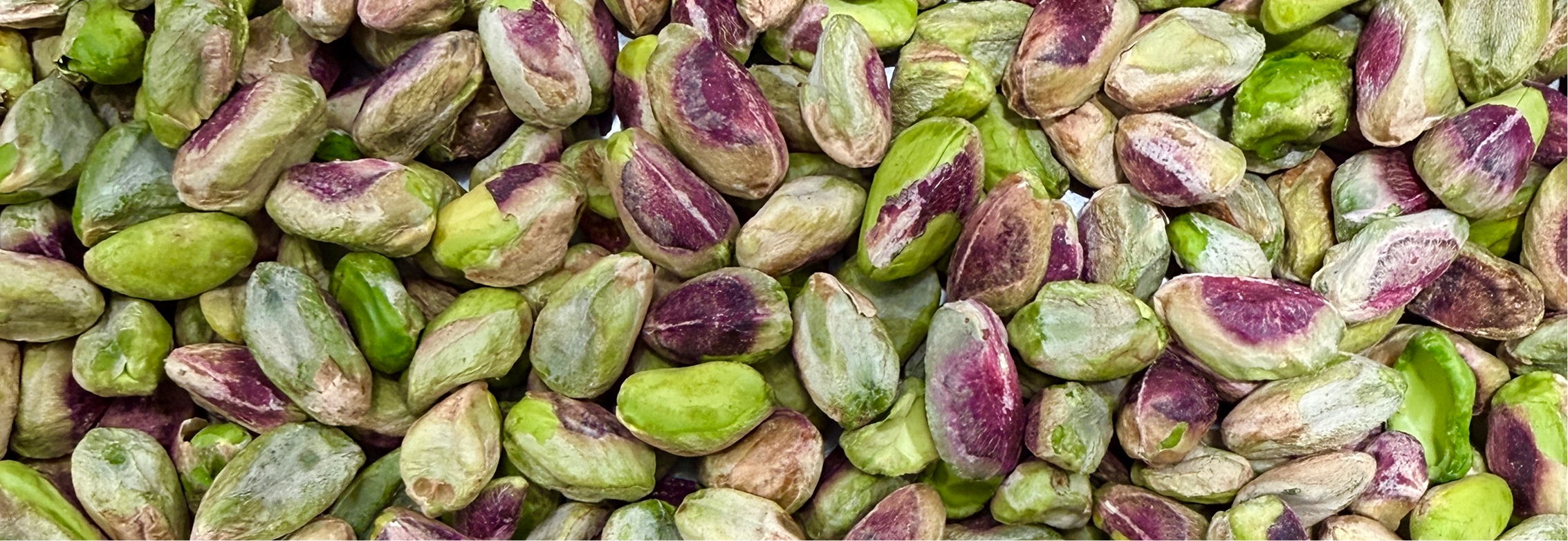
Pistachio harvesting is an operation that combines scientific precision with practical expertise. It requires careful monitoring of ripeness, field-based assessments, the selection of the most suitable harvesting method, and post-harvest logistics designed to prioritise speed and traceability. Harvesting at the optimal moment — supported by indicators such as colour change, pericarp splitting, the “tear point”, and moisture testing — forms the foundation of a successful crop.
In Spain, the harvesting window generally begins in late August in warmer regions and may extend into October in areas with a more continental climate. However, the precise timing should always be determined through direct field observation and according to the specific management conditions of each orchard.
Furthermore, integrating modern harvesting technologies with professional intake protocols — such as those implemented at Agróptimum, including immediate intake at the processing facility, batch sampling, and scheduled processing — significantly increases the likelihood of producing a premium-quality product ready for both domestic and international markets.
To ensure the success of your next harvest, advance planning is essential: monitor crop maturity closely in the field, prepare harvesting logistics in advance, and coordinate the timely arrival of batches at the processing facility so that processing can begin without delay. The result will be higher product quality, stronger market value, and improved returns on investment for your plantation.
23.07.2025

25.07.2025

15.12.2025

23.07.2025