25.06.2025
Pistachio price: factors, evolution, and market perspectives
The price of pistachio is a topic of recent interest for both producers and consumers, especially in a global market that is constantly evolving.
This article explores the various factors that influence the price of pistachio, its historical evolution, the current state of the market, and future perspectives. As we delve into this topic, we will examine how supply and demand, climate, production costs, and other elements affect the value of this popular nut.
The price of pistachio
The law of supply and demand is fundamental to understanding the price of pistachio. When demand exceeds supply, prices tend to rise. Conversely, if there is overproduction and demand remains steady or declines, prices may fall.
Pistachio markets are influenced by demand from different regions. For example, American pistachio and Iranian pistachio are in high demand in markets such as Europe and Asia. Holidays, the increasing popularity of nuts as a healthy snack, and the inclusion of pistachio in gourmet products have driven demand. In recent years, the trend towards healthier diets has led to an increase in pistachio consumption, significantly impacting its price.
Additionally, the demand for pistachios in the bakery and food industry has increased. Products like ice creams, energy bars, and nut mixes have incorporated pistachio, contributing to its popularity. This rise in demand has led producers to seek new ways to increase pistachio production to meet the market.
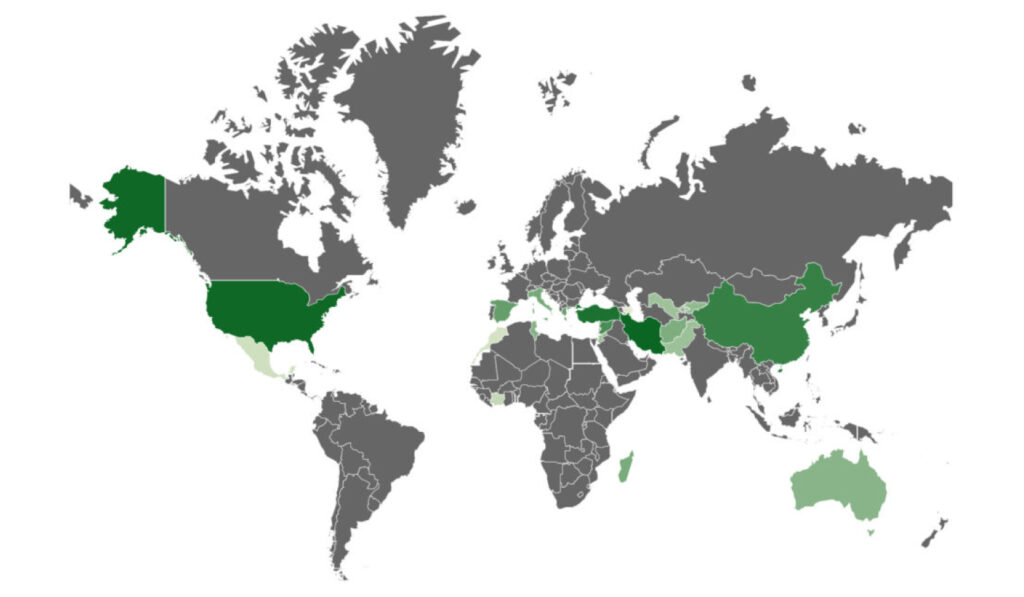
Global supply and demand
Climatology plays a crucial role in pistachio production. This crop is sensitive to weather conditions, and factors such as drought, frosts, and excessive rainfall can significantly affect pistachio production. Producing regions, such as California in the U.S. and Iran, rely on specific weather conditions to yield healthy harvests.
For example, a prolonged drought can reduce the number of pistachios available in the market, which in turn can raise the price of pistachio. Conversely, favorable weather can lead to a bountiful harvest, potentially decreasing prices. In this regard, producers must stay alert to weather forecasts and adjust their farming practices to mitigate the effects of adverse conditions.
The quality and varieties of pistachio are also determining factors in the price. There are different types of pistachios, such as Kerman and Sirora, that can have distinct characteristics in flavor, size, and texture. Higher quality pistachios tend to have a higher price in the market.
The size of the pistachio also affects its value. Larger pistachios are usually more prized and therefore more expensive. The classification of pistachios by size and quality is an important aspect in the pricing of pistachio in international markets. Consumers are willing to pay more for pistachios that meet higher quality standards, which drives producers to improve their farming methods.
If you want to know more about PISTACHIO VARIETIES
Below are some charts illustrating the evolution of the pistachio price in recent years. This chart shows how prices have responded to factors such as supply and demand, as well as climatic events.
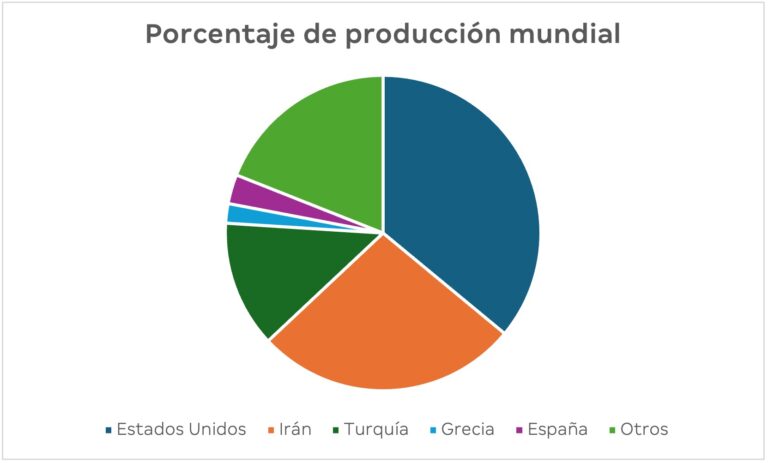
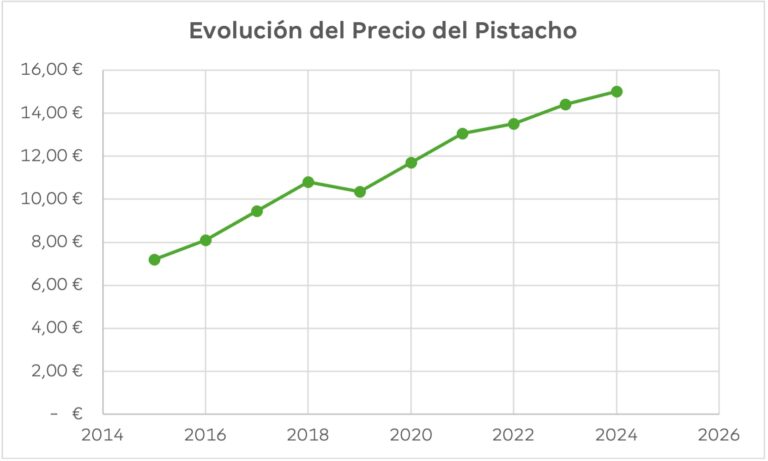
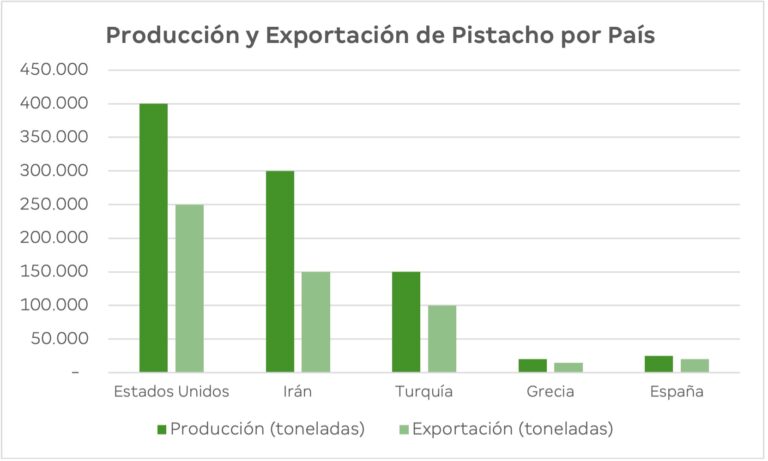
Charts to visualize the evolution of the pistachio price in the last 10 years.
Production costs are another critical factor affecting the price of pistachio. These costs include expenses for labor, agricultural inputs, irrigation, and crop maintenance. If production costs rise, producers are likely to pass those costs onto consumers, thus increasing the final price.
Moreover, the transition to more sustainable practices, such as organic pistachio farming, may entail higher initial costs, although in the long run, it could improve the profitability of the crop. Farmers who invest in technology and sustainable practices may see a return on investment through increased quality and demand for their product.
Trade policies and geopolitics also have a significant impact on the pistachio market. Import and export tariffs, as well as economic sanctions, can affect the availability and price of pistachio in different markets. For example, tensions between the U.S. and Iran have influenced pistachio exports and, consequently, its pricing.
Trade agreements and international relations also play an important role. Opening new markets for Spanish pistachio or imposing tariffs on American pistachio can alter the price dynamics. Therefore, producers must stay informed of changes in trade policies that may affect their ability to compete in the global market.
Finally, speculation in financial markets can influence the price of pistachio. Investors who speculate on the future direction of prices may cause fluctuations in the market. This is especially true in markets where pistachio is viewed as an attractive asset due to its growing demand.
Speculation can lead to prices deviating from market fundamentals, creating bubbles or sudden drops. Producers and buyers must consider these factors when making decisions about buying and selling pistachios.
In the last decade, the price of pistachio has experienced significant fluctuations. Generally, prices have shown an upward trend due to increasing global demand and challenges in production.
The price of pistachio varies considerably between different markets. In Spain, the average price of pistachio ranges from 8 to 12 euros per kilogram, depending on quality and type. Internationally, prices can range from 5 to 15 dollars per kilogram, depending on the region and quality of the product.
Prices also vary according to the type of pistachio. For example, American pistachio tends to be more expensive due to its quality and higher production costs in California. On the other hand, Iranian pistachio may be more price-competitive but is often perceived as lower quality in some markets. Price differentiation is also seen between organic and conventional pistachios, where the former usually command a higher price due to their sustainable production.
To get updated information on pistachio prices, interested parties can consult various

14.10.2026
9.10.2026
7.10.2026
1.07.2026