
9.10.2025
The industrial peeling of the pistachio: Keys to quality and profitability
The industrial peeling of the pistachio represents one of the most determining phases within the value chain of the product. It is at this point that the quality of the fruit, its market value, and the final profitability of the producer are largely defined.
A good process of green peeling, well managed and technologically optimized, not only improves the appearance of the pistachio but also influences the control of mycotoxins, the efficiency of drying, and subsequent preservation.
In this guide, we analyze in detail the industrial process of peeling pistachios, its main challenges, the equipment involved, and the key criteria for selecting a professional service that maximizes productive yield and return on investment (ROI).
The industrial peeling of the pistachio is one of the most determining phases within the value chain of the product
The peeling of the pistachio consists of the removal of the soft shell or epicarp that covers the pistachio with shell immediately after harvest. This process must be carried out quickly, as delays can lead to the development of mold, pathogens, and aflatoxins, reducing the quality of the fruit and its added value.
Peeling not only serves an aesthetic function but also has direct implications for food safety and profitability. In regions with a continental climate and calcareous soils, where dryland areas concentrate a large part of the plantations, correct post-harvest logistics and an efficient industrial peeling are essential to ensure a competitive product in the national market and even for export.
In the case of varieties such as Kerman, Larnaka, Sirora, Lost Hills, or Golden Hills, which dominate the production of Pistacia vera in Spain, the timing and technique of hulling and peeling directly influence their price and commercial quality.
The industrial peeling of the pistachio involves a sequence of mechanical operations and quality control that begin right after harvesting and end before drying. These phases are designed to remove impurities, prevent fermentations, and prepare the fruit for the stages of shelling, classification, and storage.
The Sheller or Mechanical Peeler is the heart of the industrial process. These machines use rollers, brushes, or friction discs to separate the epicarp from the hard shell, adjusting the pressure according to the caliber of the pistachio.
The most advanced units include optical sensors and automated quality control systems that detect the degree of cleanliness of the fruit and prevent surface damage. Proper equipment configuration is vital to avoid stained pistachios or damaged pistachios during operation.
Modern industrial peelers can process between 1,000 and 5,000 kg per hour, depending on the model and the conditions of the fruit. The automation of the process allows for maintaining a constant efficiency, even when there is caliber variability or differences in moisture levels between batches.
The industrial peeling of the pistachio is organized into integrated processing lines that combine several machines in sequence: screens, washers, peelers, calibrators, and pistachio dryers. Below is a detailed account of the typical flow:
The precision and coordination of all these equipment define the overall efficiency of the process and, therefore, the profitability of the producer
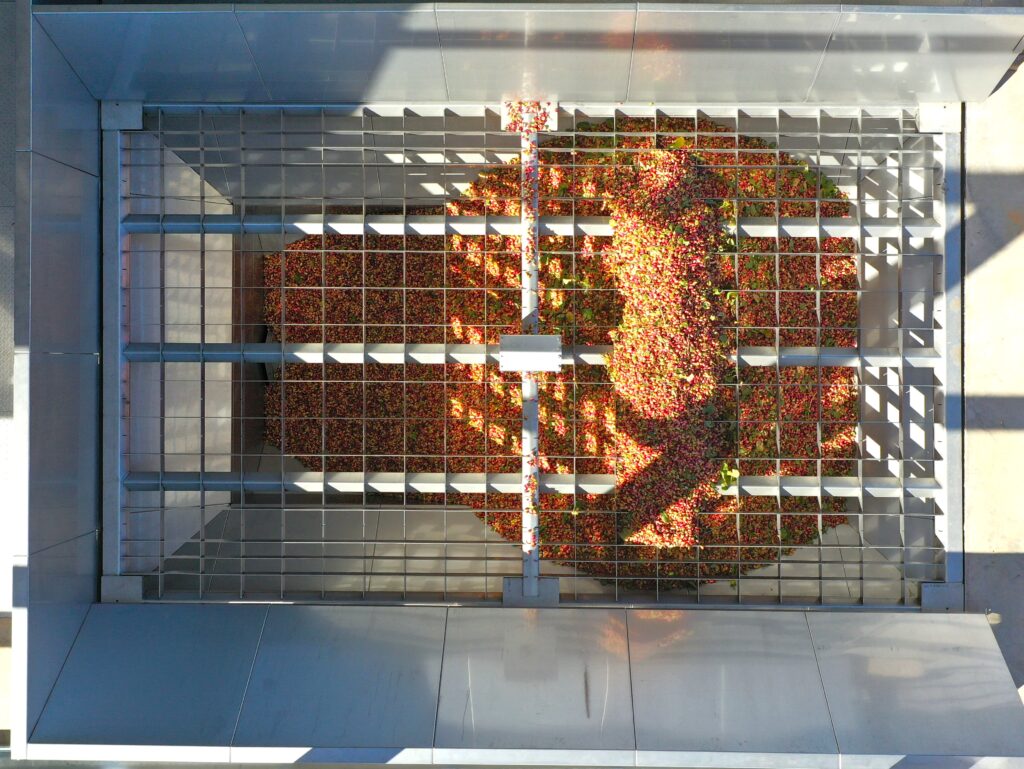
Reception of freshly harvested pistachio at our processing plant
Although current technology allows achieving high levels of automation, the industrial peeling of the pistachio still faces several technical challenges that affect productive yield and the quality of the fruit.
The management of the harvest is essential. Immature fruits do not peel properly, while overripe ones tend to have a shell that is more adhered or even broken. This imbalance can affect the speed of green peeling and generate product losses.
The caliber of the pistachio affects the configuration of the Mechanical Peelers and Calibrators. A batch with heterogeneous calibers can reduce peeling yield, increasing the need for rework or adjustments. Therefore, caliber control from the harvest is key to achieving uniformity.
Pistachios with a soft shell or microcracks can break during peeling. This problem is often associated with extreme weather conditions, calcareous soils, or irrigation errors. Good agronomic management and the use of equipment with adjustable pressure minimize this risk.
The optimization of peeling yield depends on the balance between speed, precision, and cleanliness. Equipment with advanced processing technology allows for reducing waste and maintaining the quality of the fruit, which directly impacts profitability and the added value of the product.
Do you want to sell your harvest?
Green peeling directly influences the efficiency of drying. A homogeneous peeling allows for a more uniform moisture level and reduces the time needed in the Pistachio Dryer. This translates into energy savings, better preservation of

1.07.2026
18.05.2026
17.05.2026
11.05.2026


