
12.11.2025
How to plant pistachio in Spain
The pistachio (Pistacia vera) has become one of the most profitable and sustainable crops in Spain in recent years. More and more farmers and new investors see in this nut a solid investment opportunity, with high profitability and a growing international market. But before diving into planting pistachios, it is essential to know the conditions that the tree needs, the most suitable varieties, the type of soil, irrigation, climate, and all the steps to ensure the success of the project.
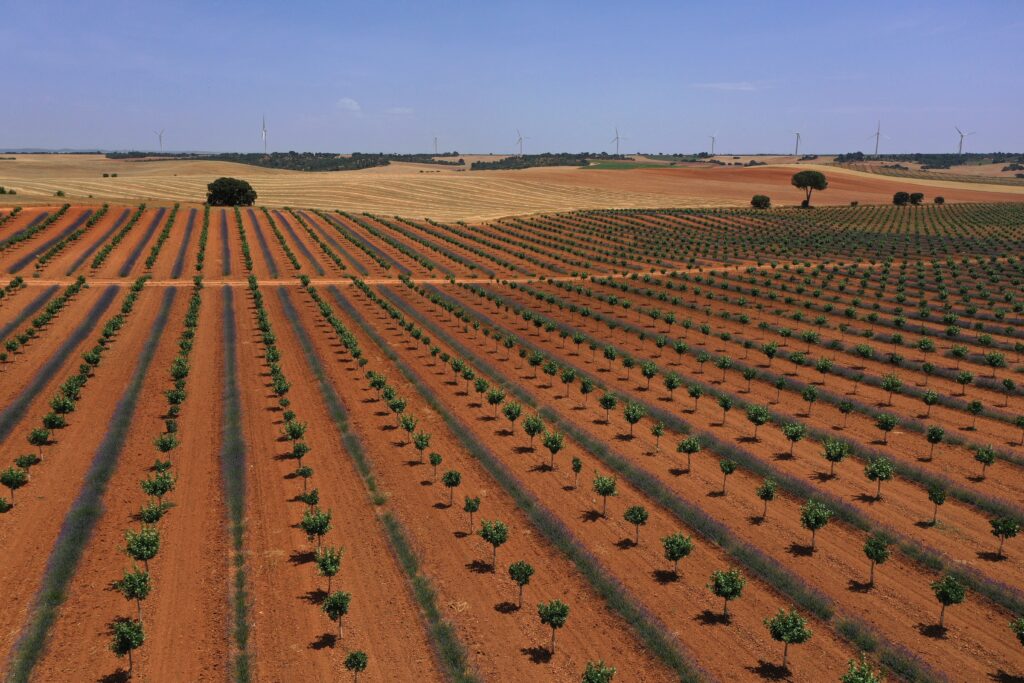
Pistachio plantations in Spain.
Content index
Before starting a pistachio plantation, the first step is to analyze whether the farm meets the ideal conditions for this crop. Not all regions of Spain are suitable, as the pistachio tree requires a very specific balance between climate, soil, and water.
The pistachio tree needs a climate for planting pistachio of continental type, with cold winters and dry, hot summers. It is a deciduous crop that requires between 600 and 1,000 hours of cold below 7 °C to break dormancy. However, it does not tolerate late frosts in spring well, which can damage flower buds.
With regard to temperatures, it withstands summer temperatures above 35 °C well, which promotes good fruit maturation, provided there is sufficient moisture in the soil and availability of water. The optimal heights are located between 300 and 900 m above sea level.
The pistachio tree adapts to poor, stony soils with some lime content, but does not tolerate waterlogging. The ideal soil is deep, loose, with good drainage, and a pH between 7 and 8.5. The roots of the pistachio are taproots, thus requiring depth to develop properly. An excess of moisture or compaction can cause root asphyxiation and fungal diseases.
Although the pistachio tree can be grown in dryland, the most productive plantations are in irrigation. A well-managed drip irrigation improves production, the size of the fruit, and the final quality. An annual supply of 2,000 to 3,500 m³/ha is recommended, depending on the region, the type of soil, and the variety. The quality of the water is also essential: it should have low salinity to avoid problems with nutrient absorption.
Do you have any doubts? Request a feasibility study
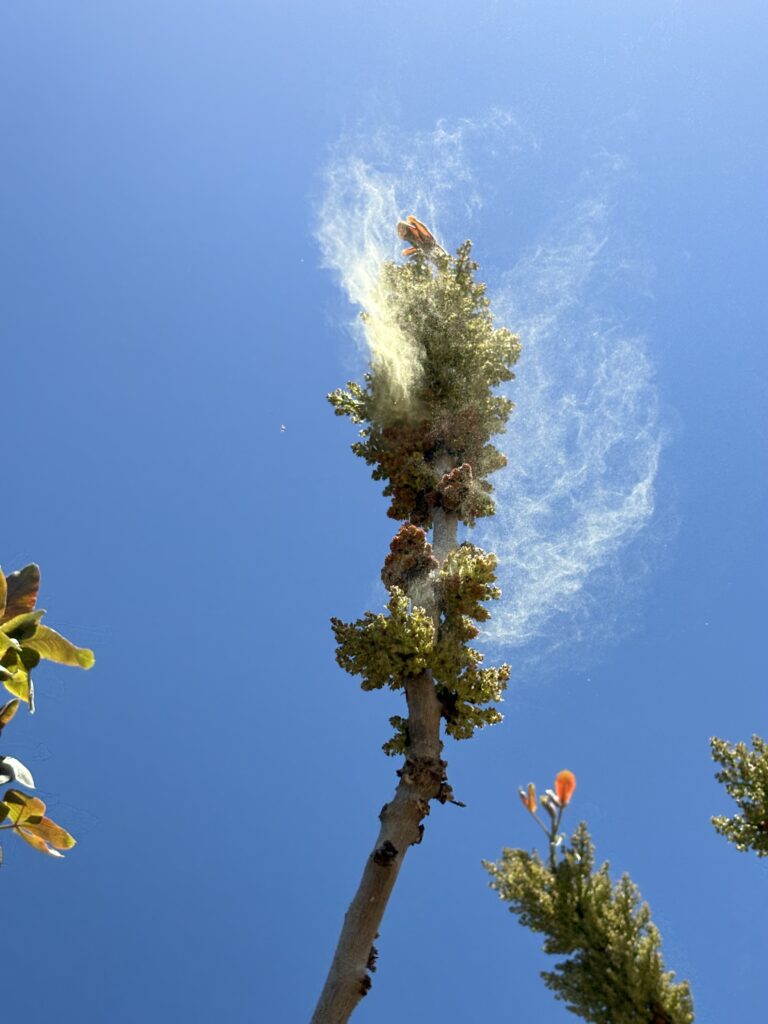
The pistachio tree or pistachio is dioecious, which means there are male and female trees. Only the females produce fruit, while the males provide the necessary pollen for fertilization. Therefore, the proportion and distribution of males are key to ensuring good production.
Among the main pistachio varieties are Kerman, Larnaka, Sirora, Golden Hills, and Lost Hills, each with different climatic and productive requirements.
The rootstock determines the soil adaptation, vigor, and disease resistance.
11.05.2026
24.02.2026
24.02.2026
9.01.2026


